
United States President Donald Trump reiterated the claims of having to do 'something' about Greenland, saying that if US doesn't take any action, Russia and China would spring in and that Washington, DC does not want to have them as neighbours.

Over 4,000 people are involved in an IPCC report. For the fourth assessment report, there were 450 authors, 800 contributing authors and 2,500 expert reviewers, says R K Pachauri, chairman, IPCC

John Beddington also said the impact of global warming has been exaggerated by some scientists.

Pachauri was responding to queries on Monday about how he intended to implement several recommendations made by the InterAcademy Council, which conducted a review of the working of the IPCC following widespread criticism stemming from erroneous conclusions in its fourth report.

Leading British newspaper Daily Telegraph on Friday apologised for publishing an article about United Nation's climate body chairman R K Pachauri, accusing him of making a fortune from his links with 'carbon trading' firms. The international publication had been running a campaign since last year against the chief of the Nobel Prize-winning Intergovernmental Panel on Climate Change, who has strongly rubbished the allegations and even issued several legal notices.

The UN made it clear that it will not conduct any inquiry into accusations of sexual harassment against R K Pachauri
Supporting India's quest for nuclear power, United Nations climate panel's chief scientist R K Pachauri has said that country should pursue it to contain emission and meet energy needs.

With the Centre ignoring the Pachauri Committee report advising against implementation of the controversial Sethusamundram project, eminent scientist R K Pachauri has said that he stands by the report and warned of serious ecological ramifications.

At a virtual press conference to launch the report, Inger Anderson, Executive Director, United Nations Environment Programme, said, "Climate change is here and now. No one is safe. Despite warnings from so many years, the world did not listen. We need to act now. Reducing greenhouse gas emissions will not only limit climate change but also reduce air pollution."

Slamming a UN climate body for predicting that most of the Himalayan glaciers will melt by 2035, the government on Monday said such forecasts were alarmist and sans scientific basis.
While the US and Russia had destroyed thousands of warheads following their treaty on disarmament, India, Pakistan and North Korea had swelled their stockpiles.

The IPCC credibility has come under attack in the past few days for picking a report that Himalayan glaciers will melt by 2035 from a science magazine without peer-reviewing it, a fault later admitted and regretted by the climate body.
He said the melting glaciers could cause a rise in sea levels which could collapse Greenland and Antarctic ice-sheets. This in turn, he said, could have a disastrous effect on countries like Mauritius and Bangladesh.

Gore, who was US President Bill Clinton's deputy in 2000, made the 2006 Oscar-winning documentary An Inconvenient Truth, after which he was seen as a champion of environmental issues and climate change.
A lavish ceremonial dinner will crown an evening of celebrations for Venkatraman Ramakrishnan and the 12 other Nobel Prize winners on Thursday at the Stokholm City Hall. The menu, like always, remains a well-kept secret.

I am inclined to believe that the Venezuela adventure is not an indication of American strength, alas, but rather of American weakness, points out Rajeev Srinivasan.
While United Nations climate chief Dr Rajendra Pachauri has rejected calls to step down in the wake of the Inter-governmental Panel on Climate Change's withdrawal of an erroneous warning on Himalayan glaciers, the Indian climate official has admitted that there could be more errors in the Nobel prize winning report.Dr Pachauri said he was considering whether to take action against those responsible.
India and China need to chart a different path to develop low carbon economies to combat global warming, Chairman of the UN Intergovernmental Panel on Climate Change, Rajendra Pachauri said. In both India and China, there is now a serious debate. "In India I can see it for sure because the prime minister is quite concerned about this issue. He set up the advisory council on climate change," he said.
Developing economies will have to come forward to devise their own technologies for the energy sector rather than looking up to the developed nations, R K Pachauri, chief of United Nations Intergovernmental Panel on Climate Change said in New Delhi on Monday. In his first public appearance after the organisation he headed won the Nobel Peace Prize this year, Pachauri said that there is a clear line of distinction between the energy needs of developing and developed nations.
IPCC, headed by Dr Pachauri, has a team of dedicated scientists from various countries who have won the prize for their pioneering work in the field of environment.
'There is not a parallel on this planet, in any field of endeavour as you have in the case of the IPCC.' Dr R K Pachauri defends the science involved in drafting the reports on climate change.
Asked about his initial reactions on the IPCC winning the Nobel Prize, Dr Pachauri said he was "deeply humbled by the honour that has been bestowed on me by the Nobel Committee. In any case, this is an honour that goes to all the scientists and authors who have contributed to the IPCC's work."
The main "culprit" for CO2 emissions is coal-based energy which has 24 per cent share in India's emissions and 41 per cent worldwide. While coal accounts for 25 per cent of energy, the role of renewables is 13 per cent. Of these, wind, solar and bio masses contribute just 4.1 per cent.
More private vehicles, according to R K Pachauri, is not the right way forward. On the contrary, it would take the world farther from solutions to climate change. Tata Motors' rivals, most recently Suzuki Motor Corp chairman O Suzuki, have often wondered aloud how the Rs 1 lakh car would fare on the parameters of safety and environment suitability.

'Keeping the global temperature below not just 1.5 degree Celsius, even 2 degree Celsius is beyond our reach now. Both are impossible.'
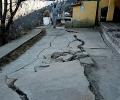
They said rampant infrastructure development without a plan is making the fragile Himalayan ecosystem even more vulnerable to the effects of climate change which acts as a force-multiplier.

Heatwaves with higher humidity levels can be more perilous because the air cannot efficiently absorb excess moisture. This limitation restricts the human body's ability to evaporate sweat and affects the moisture content of certain infrastructure like evaporative coolers.

Pachauri is scheduled to speak in China from August 22-28.Thereafter, he is scheduled to attend a meeting in Tokyo.

'If we want a better life, we have to treat nature better, and behave properly.' 'That's nature's message to us.'

The 2C target was always somewhat arbitrary as a threshold for preventing the worst effects of global warming in the form of rising sea levels and more severe and frequent storms, floods and droughts.

As Singapore, New York and Melbourne have shown, cities can mitigate the impact of heatwaves if they have the will to create green infrastructure, explain Amit Kapoor & Bibek Debroy.

The mercury soared to 46.2 degrees Celsius at Najafgarh, making it the hottest place in the capital.

The average global temperature between January and October has been 0.68 degrees Celsius higher than the 20th century's average global temperature of 14.1 degree C.

Yet the international response to this threat caused by the overuse and misuse of antimicrobial drugs has been feeble, they said.

India will launch its own composite index next year to quantify the impact of heat on its population and generate impact-based heat wave alerts for specific locations, the India Meteorological Department (IMD) has said.

The Aam Aadmi Party's government's policies on water and electricity are well intended but not the best way to achieve the desired goals as the supply of over 600 litre of free water to Delhi residents may end up in a lot of wastage, Directer General of The Energy and Resources Institute R K Pachauri has warned.

COP 21 is about how much carbon space is left and who gets how much of that space

India must be prepared to deal with climate disasters, geopolitical confrontations, and social strife linked to global events, asserts Jayant Sinha, chairman of Parliament's Standing Committee on Finance.
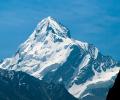
A research shows that the health of the majestic Gangotri glacier that feeds the river Ganges has been affected, as the maximum temperature in the region has shot up by 0.9 degree Celsius and snowfall reduced by 37 cm annually.

'If you look at the entire 60-day period of March and April, you see that temperatures were soaring more than 3.5 degrees Celsius above the maximum temperature.' 'Normally, events like this happen only for a short period.'
